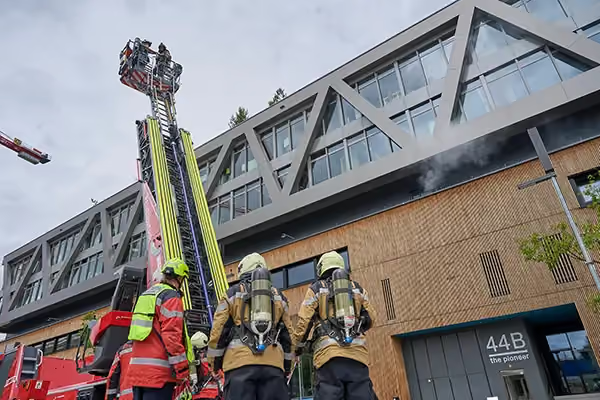
Safety on an innovation campus involves more than just technology and fire safety.
It is just as important that people know how to react in an emergency. That is why unannounced evacuation drills are held regularly at uptownBasel. Following the last drill, Zelihe Alidemaj, Lead Operations, told us how it went and where there is still room for improvement.
What was the goal of the exercise — and what did it actually show?
The goal was to test alerting, evacuation, and collaboration among everyone involved under realistic conditions. We wanted to know: do the defined processes work? Is the emergency organization ready to act? Can people leave the buildings safely?
The result was encouraging: the alert was triggered correctly, the evacuation was completed within a short time, and the emergency organization carried out its tasks largely as planned. At the same time, we gained valuable insights into where we can further improve processes and communication.
How do you coordinate an evacuation across a campus with such diverse tenants and uses?
The diversity makes coordination demanding — but it's also a key part of our safety concept. We have a clear emergency organization with defined roles and responsibilities. The key is our safety committee, in which the various tenants are represented. We meet regularly so that safety-relevant information reaches the respective organizations quickly. This is complemented by the daily presence of our security team and facility management on campus.
What went especially well this time — and where is there room for improvement?
What stood out positively was the high level of discipline among everyone involved. The alert was taken seriously, the buildings were evacuated in an orderly manner, and the collaboration was professional. That shows that safety awareness is well established on campus.
At the same time, it became clear that certain pieces of information — for example, about the new location of an assembly point — hadn't reached everyone. Insights like that are valuable. They help us sharpen our processes.
What does safety mean on an innovation campus that's still being built?
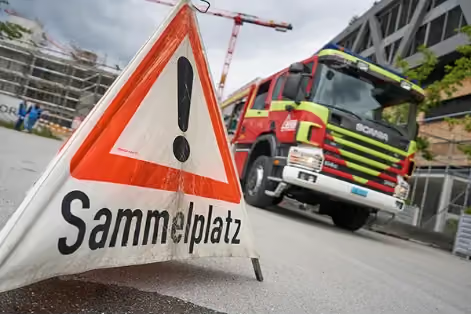
For us, safety isn't a static state but an ongoing process. On a campus with diverse companies, uses, and dynamic growth, safety concepts need to be continuously reviewed. That's why we deliberately invest in exercises, training, and exchange with our tenants — from the very beginning, not only once something happens.
What will you personally take away from this exercise?
Above all, I take away that we're on the right track. The exercise showed that our emergency organization works and that collaboration on campus is already very well-rehearsed — but also that even small information gaps can have a big impact. That's exactly the purpose of exercises like this. What matters isn't that everything runs perfectly, but that we learn from the findings and consistently get better. That mindset also shapes the safety culture on our campus.
